
Same ad, two funnels: put the calendar inside the form
REVV Travel ran one Meta ad video into two funnels for a week. When the calendar sat inside the form, 65% of applicants booked a call. When it sat on a separate booking page, 26% did.
Same video, two funnels
REVV Travel sells guided motorcycle tours from Barcelona, Málaga and Milan. Its buyers are riders in the US and Canada, and every sale starts with a short call.
In the week of October 20, 2026, REVV ran the same Pyrenees video as two Meta ads, each aimed at men aged 45 to 65 in the US and Canada:
- Funnel A: a survey page, then a separate page to book the call.
- Funnel B: a SimpleCheck SmartForm Survey, one question per screen, with REVV's calendar as the last step.
See the SmartForm Survey live
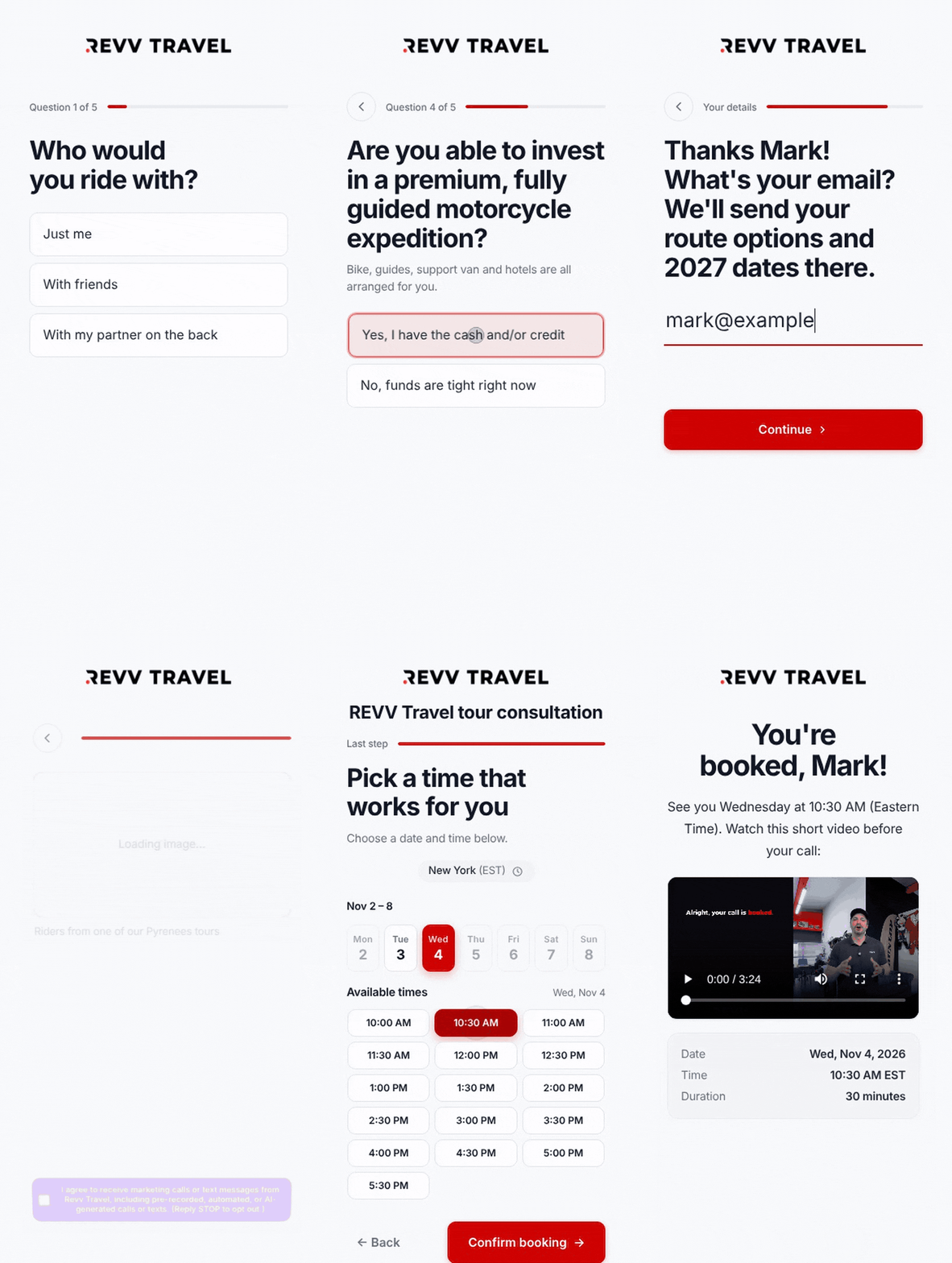
REVV's live SmartForm Survey on a phone, slightly sped up. Mark is a sample rider; nothing was submitted.
The result: 65% against 26%
Oct 20–26, 2026 | A: survey page, then booking page | B: SmartForm Survey, calendar inside |
|---|---|---|
Applicants | 38 | 46 |
Reached the booking step | 18 opened the booking page | All 41 qualified applicants saw the calendar |
Booked a call | 10 (26%) | 30 (65%) |
That is two and a half times the booking rate from the same ad video.
And the survey page actually won the first half. It turned 12.6 of every 100 visits into an application, against 10.5 for the form. Everything the form gained, it gained after people applied.
The leak is the second page
20 of the 38 survey applicants never opened the booking page. Only 3 of them had booked a call by the end of the week.
A separate booking page is one more load, one more decision and one more chance to close the tab. More than 9 in 10 visits to both funnels came from a phone, where that chance is bigger.
The SmartForm Survey has no second page. The calendar is the next screen of the conversation the rider is already in, so every qualified applicant saw it.
Ad click to booked call in 2 minutes 25 seconds
The form was the ad's landing page, so the clock starts when it opened, right after the click. For the 30 riders who booked, the medians were:
- 0:00 Question 1 of 5, straight from the ad
- 0:22 Question 4 of 5, the last fit check
- 0:48 Contact details, asked after the questions
- 1:49 The calendar
- 2:25 Booked
7 of the 30 booked a call for the same day.
Qualify first, then show the calendar
Two questions screen for fit before the calendar appears. The 5 riders who couldn't fly in or invest yet saw a friendly "let's stay in touch" ending with a link to REVV's tours. They still went to REVV's CRM for later follow-up.
Only riders who could go on to book sent Meta an application event. So the ads learn from real prospects, not from everyone who filled in a form.
Use the confirmation screen
The booking confirmation greets the rider by name and offers a 3½-minute video from the REVV team. Of the 20 riders who saw that screen, 17 pressed play and 12 watched to the end, before the call had even started.
Did they show up?
By October 30, 21 calls booked through the SmartForm Survey had taken place, against 9 from the survey page.
There was a lesson in it too. 9 of those 21 calls took place only after the rider missed the first slot, against 2 of the survey page's 9. If you book people in minutes, plan reminders and a quick follow-up for anyone who misses.
What to copy from REVV's funnel
- Judge a funnel by the calls it books, not the applications it collects.
- Put the calendar inside the form, as its last step.
- Ask the qualifying questions before the calendar, and give people who aren't ready a good ending.
- Use the confirmation screen, and remind the people who book fast.
SimpleCheck's SmartForm Survey asks your questions, qualifies the lead and books the call in one flow. Try it free for 7 days. Already a customer? Open the widget editor and pick SmartForm Survey on the Style step.
How we measured
REVV Travel's Meta ads, October 20 to 26, 2026, in the ad account's time zone (Madrid). Bookings are counted up to October 26 at 19:00 UTC. One more survey applicant booked on October 29, which makes it 65% against 29% with bookings to October 30.
Two ad sets with different budgets ran side by side, so this is a comparison, not a randomized split test. The numbers come from SimpleCheck's own records and Funnel Tracker, REVV's GoHighLevel calendar and Meta.
Calls that took place are REVV's GoHighLevel results on October 30. A rider marked as a no-show who later showed up counts once.
More from REVV Travel: how fixing a double count made their Meta applications cheaper.
Updated on: 03/11/2026
Thank you!